Saturday, December 10, 2011

The Grand Army of the Republic and the Lew Wallace Veteran Battalion

During observances of the 70th anniversary of Pearl Harbor this week it was announced that at the end of this year, the national association known as the Pearl Harbor Survivors Group will disband. As this group of men and women who shared a unique war-time distinction fades away, it harkens back to another organization that once played an important role in American military history.

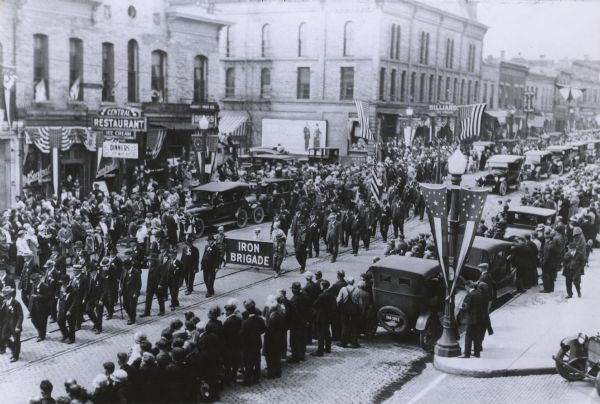
Shortly after the end of the Civil War a fraternal organization was created in Decatur, Illinois. It was called the Grand Army of the Republic, or G.A.R. for short, and was composed of men who had honorably served in the Union army. At its peak in the 1890s it boasted almost 500,000 members across the country and was both a political and, at times, a social force of much influence. Generally supportive of Republican candidates, it also pushed for veterans' pensions and for voting rights for African-Americans. Five members of the G.A.R. were elected president and it assured that Decoration Day (Memorial Day) became a national holiday. It was formally dissolved in 1956 when its last surviving member died. The G.A.R. held annual encampments every year from 1866 to 1949. The first encampment in 1866 and last encampment in 1949 were both held in Indianapolis. Although it struggled at times to maintain its stature, its organizational structure was emulated by the American Legion, formed after World War I, and the Veterans of Foreign Wars, created after World War II. Even today, many consider the Sons of Union Veterans of the Civil War (SUVCW) a successor organization.

The G.A.R. was especially popular and powerful in the Midwest. In Crawfordsville, the locals created the Lew Wallace Veteran Battalion. The General himself was an important member of the battalion. Well over 100 men from Montgomery and surrounding counties joined the Lew Wallace Veteran Battalion. Boone County was particularly proud as they could count Ben Herr (not quite Ben-Hur) of the 72nd Indiana Volunteers as a member. The only requirement for membership in the Lew Wallace Veteran Battalion was an honorable discharge from service and the promise to wear dark colored clothes when on parade—no straw hats or linen dusters (long travel coats) permitted!

In September of 1887, Crawfordsville hosted a local encampment. A large tent city was established on the fair grounds called Camp Henry S. Lane, with flags of all sorts waving in the breezes and military music playing. The camp was electrified which lessened the need for men to gather around camp fires. However, a large camp fire was built the first night and Wallace delivered the first speech. The great spectacle of the event was a mock battle. The local paper admitted that owing to the confined space available it was going to be difficult to present much of a battle—but that the Rebel fort, which had been built for the occasion, would fall. The paper also suggested that people should probably leave their teams of horses downtown lest they become frightened and create pandemonium in the crowd. In addition to Wallace, important speakers included Colonel R.P. DeHart of Lafayette, the Honorable Andrew Marshall of Fountain County, the Honorable Joseph C. Suit of Frankfort and Generals George McGinness and Benjamin Harrison of Indianapolis. Over 2,000 men participated in the grand parade.

In 1895, the national G.A.R. encampment was held in Louisville. Initially, the Big Four (Monon) Railroad was selected as the official route to the meeting. With a round trip fare of $3.05, the Big Four promised to match any competing railroad that offered a lesser fare. A special train was to be arranged with hundreds on board. The train was to be decorated with the stars and stripes and the thirty-piece Lafayette Military Band was to provide music en route. Unfortunately, members of the committee got their signals crossed and transportation to Louisville was not quite as smooth as originally intended.

The encampment itself drew over 100,000 men from all over the country. General Wallace drilled and instructed the men prior to departure and then led the members of the Lew Wallace Veteran Battalion in the grand parade. A committee made all lodging arrangements (meaning a cot in the encampment), meal arrangements for the men and banners. The banners were attached to six-foot long staffs of Tennessee red cedar. As stated by the committee members, these Tennessee cedars had protected the boys during the fierce battles they fought and would now support the aging veterans as they again demonstrated their support for the Union. Wallace and his battalion were special features of the encampment and Wallace was booked for at least three camp fire speeches (New Albany, Jeffersonville, and Louisville). The battalion was also invited to attend the ceremonies dedicating the Chickamauga National Park.  

In 1899, Terre Haute hosted a G.A.R. encampment that the local papers called one of the most successful in years. The encampment easily doubled the population of the city and the Terre Haute Gazette issued a sixteen page special edition. General Wallace occupied a “conspicuous position on the front page. A small portrait of Governor Mount also appeared with many other celebrities of the civil war [sic].”

In 1909, Crawfordsville hosted a 30th annual encampment of the G.A.R. By this time many of the Union soldiers, including General Wallace, had gone to their great reward but they were not forgotten in this event hosted from May 19th through the 21st. The homes of Montgomery County Civil War Generals Wallace, Canby, Morgan, Manson, and Hawkins were all featured as was the home of Confederate soldier Maurice Thompson. Wallace’s Study was specially featured with special note made of Wallace’s painting of the Lincoln conspirators and his sketches of Commander Wirz of Andersonville. Other points of interest for the visiting veterans were Wabash College, the Henry Lane Home, the Masonic Temple, the Elks Home and the Public (Carnegie) Library. Even the country club that had served as Wallace’s country home and Oak Hill Cemetery were featured on tours. In the grand parade more than 5,000 men and women marched through a red, white and blue bedecked downtown.

The 1909 encampment was not the last G.A.R. event for Crawfordsville as picnics and gatherings continued for years. Men and women such as Louis Bischof, Henry Talbot, J. McCormick, Arch Austin, George Myers, J. Sellars, William Daggart, S.L. Ensminger, H. Cowan, B. Cowan and others continued to proudly remember the service of Union veterans. The local G.A.R. was also instrumental in the erection of the war memorial on the Courthouse grounds. After the death of Henry Talbot in 1924, almost sixty years after the end of the Civil War, the slow fade of the G.A.R. accelerated. As leaders such as Lew Wallace passed on, this important organization that meant so much too so many became a thing of the past much loved but no longer viable. Because of the buildings and memorials the G.A.R. sponsored, the elections it affected, the organizations it influenced, and the issues it addressed, its impact on communities throughout the country continues to be significant 145 years after it was formed and almost sixty years after it ceased to exist.

Saturday, December 3, 2011

It's Tea Time!

Holiday Tea Raises Necessary Funds for Lew Wallace Study

The General Lew Wallace Study & Museum hosted their 5th Annual Holiday High Tea & Fashion Show in two of Crawfordsville's most beautiful historic homes on Friday, December 2, from 3-6 p.m.  Over 130 guests took in the sights, sounds and delicious tastes of the Tea, which took place in both the Historic Elston Homestead  (now the home of Pat and Chris White, Wabash College's President and First Lady) and the Dorothy Q Chapter House of the Crawfordsville Daughters of the American Revolution.

Guests toured the richly-appointed homes decorated for the holidays, enjoyed tea and coffee along with an enormous variety of sweets and savories, enjoyed a live interactive fashion show with models mingling through the crowd, shopped from a gorgeous display of hand-crafted holiday wreaths created by area artists and designers, and listened to wonderful holiday music performed live by the T-Tones vocal group from Wabash College.

The Holiday High Tea is the second-largest annual fundraiser of the year for the General Lew Wallace Study & Museum, a National Historic Landmark and 2008 winner of the National Medal for Museum Service, the highest honor this country gives to museums.  Funds raised through the Holiday Tea go directly to the educational programming and collections care of the Museum.


Sunday, November 20, 2011

Holiday High Tea Features Music, Food, Shopping and Fun


This holiday season, revelers will get a rare opportunity to see two of Crawfordsville’s most prestigious historic homes decked out in Christmas finery during the 5th Annual Holiday High Tea & Fashion Show, a fundraiser for the General Lew Wallace Study & Museum, on Friday, December 2 from 3:00-6:00 p.m.

This year’s event takes place at both the Crawfordsville chapter DAR House on Wabash Avenue and the old Elston Homestead on adjacent Pike Street, now home to Wabash College President Patrick White and his wife Chris.  These privately-owned homes, two of Crawfordsville’s most well-preserved architectural treasures decorated lavishly for the season, will feature live entertainment, an interactive fashion show, a sale of original themed holiday wreaths, and live holiday music from the T-Tones, a men’s vocal ensemble from Wabash College.

“Our Holiday High Tea has become a valued community event celebrating the advent of the holiday season in a beautiful historic setting,” said Helen Hudson, Chair of the Tea Committee.  “The General Lew Wallace Study & Museum, the Daughters of the American Revolution, Wabash College, and Crawfordsville Main Street merchants cooperate to create for us, and for our many out of town guests, a sparkling afternoon.”

High tea will be served at the Elston Homestead, complete with coffee, sweets, and savory snacks provided by the Tea Committee and Bon Appétit from Wabash College.  Local models will show off fashions from local boutique heathcliff, and the venue will be decorated with seasonal floral arrangements by Milligan’s Flowers & Gifts.  Homestead Greetings & Gifts will showcase the latest Vera Bradley designs, and door prizes from several local merchants will be awarded throughout the afternoon, giving event-goers several chances to win accessories and decorations to brighten their own homes. 

The Daughters of the American Revolution will be offering tours to Tea guests of their beautifully-appointed Dorothy Q chapter house, decorated in a Victorian Christmas motif where a unique display of original themed holiday wreaths will be available for sale.  These wreaths have been created especially for the Tea by artists and designers from throughout the area, and each one will be a fabulous décor item or holiday gift idea.

The afternoon’s festivities will not be limited to the tea, however.  Guests are being invited to make a day of their Crawfordsville sojourn, taking advantage of discounts and specials only for Tea guests throughout the downtown retail district, enjoying lunch at several terrific restaurants, and possibly even culminating their visit by purchasing tickets to the Sugar Creek Players’ presentation of “Yes Virginia, There Is a Santa Claus”, which premieres at the Vanity Theater that night.

Reservations for the Holiday High Tea and Fashion Show are $25 per person and due by November 30.  To reserve places for you and your guests, call the General Lew Wallace Study & Museum at 765-362-5769.

Saturday, November 12, 2011

A Look Inside Our Collection: Randolph Rogers

Throughout his life Lew Wallace had a deep interest in the creative arts. He created original works of art and he acquired works by others. One of the most recognizable works he acquired was a bronze bust of himself created by the famed American sculptor, Randolph Rogers. Wallace’s bust is signed by Randolph Rogers and dated 1862. It was cast by Jules Berchem of Chicago. Who actually commissioned the bust and how it came to Wallace is unknown. It is, none the less, one of the most important works of art in the collection.

Randolph Rogers was born in Waterloo, New York, July 6, 1825. Growing up in Ann Arbor, Michigan, he moved to New York City at about the age of 20. Various accounts have Rogers moving to New York to pursue a career as a magazine illustrator but ultimately finding work in a dry goods store (some say a department store). At any rate his employers discovered his aptitude for carving and promptly financed his trip to Florence, Italy in 1848 so that he could pursue formal training. In Florence, he studied at the Academy of Saint Marks with Lorenzo Bartolini. When Bartolini died in 1850, Rogers moved to Rome where he established his own studio. It appears he may have returned to New York for a brief period, but for most of the rest of his life he lived and worked in Rome.

Rogers quickly established a reputation as one of the outstanding and most prolific American neoclassical sculptors of his generation. In 1852, he had a sculpture entitled “Night” exhibited at the National Academy of Design in New York. Although this work has been lost, it was very well received. He followed this work with one entitled “Ruth Gleaning” in 1853. The enormous popularity of this statue led to his receiving the commission for the main entrance doors of the U.S. Capitol. The bronze doors stand seventeen feet tall and weigh an impressive 20,000 pounds. Called the Columbus doors, they represent scenes from the life of Columbus in bas relief. Throughout the 1850s, Rogers’ works were largely of mythical subjects in a neoclassical design or portrait busts. Perhaps his most popular sculpture was “Nydia, the Blind Flower Girl of Pompeii.” He sold almost 100 copies of this particular statue and it is considered by some to be the most popular American neoclassical sculpture ever created.

Just prior to the Civil War, Rogers received a commission to complete the Washington monument that stands in downtown Richmond, Virginia. This monument had been left unfinished by Thomas Crawford, its original designer. This was a fortuitous commission for another reason because in 1857, during his time in Richmond, Rogers married. Around this time he was also completing a statue of John Adams in Mount Auburn Cemetery in Cambridge, Massachusetts and “Angel of the Resurrection” for the Samuel Colt monument in Hartford, Connecticut. Beyond these monumental works, Rogers was one of the most sought after sculptors by Americans who were completing their grand tours of Europe. It was customary for travelers who were preparing to depart Europe to sit for a portrait bust in one of the studios in Rome, and Rogers was one of the most popular artists.

By 1863, Rogers was beginning to receive commissions for busts and statues relating to the Civil War. In just a few years he became the preeminent sculptor for Civil War memorials and statues with notable commissions like the Soldiers Monument in Gettysburg, the Michigan Soldiers’ and Sailors’ Monument in Detroit (considered among the first large scale commemorations of the Civil War by a large city), an impressive statue called “The Sentinel” for Spring Grove Cemetery in Cincinnati, a statue of Abraham Lincoln for Philadelphia and one of William H. Seward in Madison Square Park in New York. In keeping with the Civil War commissions he was receiving at this time, he created the bust of Major General Lew Wallace in his Civil War uniform.

In 1873, Rogers was chosen a professor of sculpture at the Academy of Saint Luke in Rome, the first American to be so honored. In 1882, he suffered a stroke and was never able to work as a sculptor again. In 1884, he was awarded the order of the Caviliere della Coronoa d’Italia, an honorary knighthood bestowed in recognition of service to the Italian Republic.

Randolph Rogers passed away in Rome on January 15, 1892. Among the museums in America that boast works by Rogers are the Metropolitan Museum of Art in New York, the Museum of Fine Art in Boston, the Detroit Institute of Art, the National Gallery of Art and the Smithsonian in Washington, the Brooklyn Museum/Luce Center for American Art, the Philadelphia Museum of Art, the Los Angeles County Museum of Art and, closer to home, the Indianapolis Museum of Art which has it’s own version of Roger’s famous “Ruth Gleaning.” With the bust of General Wallace created by Randolph Rogers as part of our art collection, the Study is in good company.

Thursday, November 10, 2011

Wintertime Blues, I Mean Blooms


I am sitting at my desk, which I don't do very often, watching snow flurries out the window. Just 2 days ago, the weather was a balmy 68 degrees and I worked in the gardens. I am getting the gardens all prepped for the long winter with pulling up annuals,cutting back and mulching the perennials. I noticed some lingering color, even though we've had quite a few frosty mornings.


Myrtle, wild violets, Liberty snapdragons, Evolution salvia, Lady in Red salvia, Stella d'Oro daylilies, zinnias, Blue Hawaii ageratum, Harmony and Scarlet Sophia marigolds and chrysanthemums are just some of the flowers still blooming at the Museum. They may be covered in snow shortly or with Indiana's unpredictable weather, basking in warm temperatures again.


Bulbs are being planted and a layer of mulched leaves is being added to the gardens. It's wishful thinking that Spring will be here sooner, rather than later.

Saturday, November 5, 2011

Museum Welcomes New Associate Director

Erin Gobel joined the staff at the Lew Wallace Study as the Associate Director in October 2011. Erin received a BA in history from Hanover College in 2007. She earned an MA in Public History and a Graduate Certificate in Museum Studies from IUPUI in 2010.  She wrote her thesis about the Free Kindergarten Society of Indianapolis.  She interned and worked at the Indiana Historical Society, the Indiana Supreme Court, and the Benjamin Harrison Presidential Site. She currently works part-time at the Rotary Jail Museum as the Curator. She also researches and writes National Register nominations as a consultant for Partners in Preservation.  She is currently working on the nomination for Dwight and Jamie Watson’s home on East Wabash Avenue.

Erin and her husband, Kyle, recently bought a house in Crawfordsville.  She enjoys baking and watching Purdue basketball and football. She also loves baby-sitting her two nephews.

“I’ve enjoyed my first few days working here and meeting everyone at the Study,” said Gobel.  “I’m looking forward to learning more about the educational programs offered, particularly the Lew Wallace Youth Academy. I’m really excited about this new opportunity.”

Friday, October 7, 2011

Hard hats and helmets


Fall- the time of cool, brisk mornings and quiet evenings. Time to slow down and look at nature and . . . . .don the hard hats, helmets and shoulder pads!

The beautiful colors of fall have arrived with the bright yellow hickory leaves, the orange-gold of the sassafras and the bright red leaves of the dogwood. A virtual artist's palette for a few weeks.

But be on the lookout for the dreaded head knockers! Walnut, hickory and oak trees are causing havoc all over the grounds of the Museum with the falling nuts. Crash, bam, kerplunk, thunk , splat are just a few sounds of the Museum. A visitor walking on the grounds may appear unsteady until you realize they are dodging the walnuts laying all over the ground.

Neighbors, preschoolers, school groups are visiting the grounds and collecting leaves and seeds for class projects. A great time to visit and see the beautiful trees and gardens- but bring your hard hat!